Problem
At the onset of the COVID-19 pandemic, local makers and micro manufacturers mobilized quickly to produce critical personal protective equipment for medical facilities. However, these efforts were often fragmented, relying on ad hoc coordination through spreadsheets, email, and messaging tools. There was no lightweight system to manage production assignments, quality control, and logistics across distributed makers, making it difficult to scale output or reliably deliver PPE to healthcare providers when it was needed most.
Solution
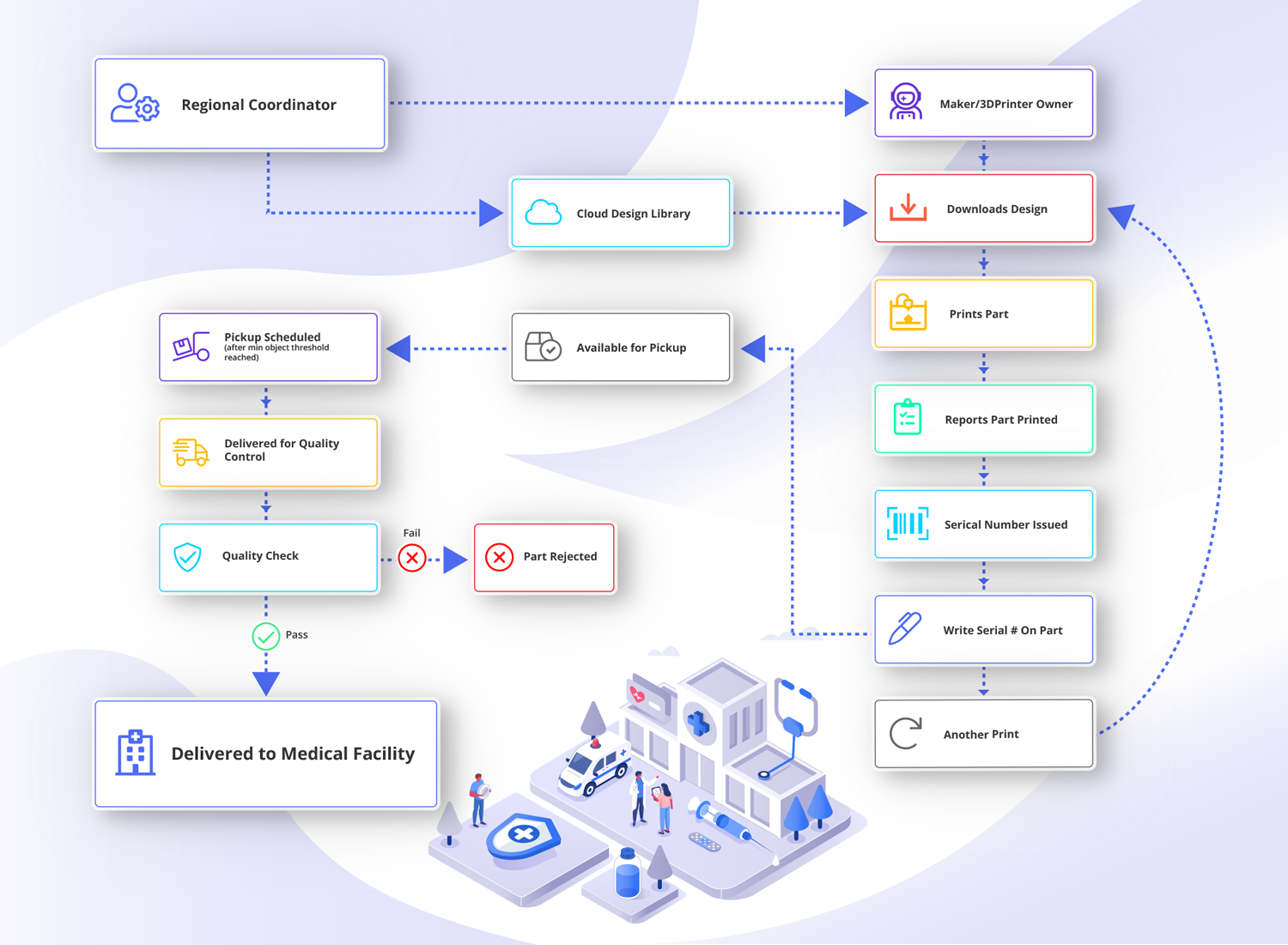
AstroPrint Clusters was developed as a lightweight supply chain management platform to help regional coordinators organize and scale networks of micro manufacturers during the pandemic. The software enabled coordinators to invite local makers into a cluster, capture their production capabilities such as 3D printing or sewing, and assign approved designs for PPE production.
The platform tracked individual maker output, quality control reports, and overall production progress in real time. Once production thresholds were met, coordinators could trigger logistics workflows to collect PPE from participating makers and deliver it to local medical facilities. This approach transformed decentralized volunteer efforts into coordinated, traceable manufacturing operations capable of meeting urgent community needs.
My Role
I supported the development and adoption of AstroPrint Clusters through user testing, experience validation, and the creation of clear educational and marketing materials. I worked closely with coordinators and makers to gather feedback on usability, workflows, and clarity, helping refine how the product supported real world emergency production scenarios.
In addition to testing and feedback, I designed marketing assets and step by step tutorials that helped users quickly understand how to join clusters, report production, and participate effectively. These materials were critical in enabling rapid onboarding and widespread adoption during a time when speed, clarity, and ease of use were essential.